The Human Capacity Project
A WORKFORCE RESILIENCE PROGRAM FOR SENIOR TEAMS
The pressure is not the problem.
The accumulation is.
Combined Practice
Joseph Scorselo · 30 years
Dr. Leonard Khirug · 25 years
Deployment Context
Not adapted from clinical or therapeutic settings. Built for high-pressure environments.
Measurement
Baselined, re-measured at week 4, and followed up at day 90.
Entry Point
No preparation needed. A calibration, not a sales call.
The Organisational Dilemma
Your leaders are highly resilient.
And quietly accumulating load.
You have invested in wellness programs, flexible hours, and resilience training. The underlying exhaustion remains. Decisions take longer. Cross-functional friction is higher. The cognitive bandwidth required to navigate complex change is unevenly deployed.
This is not a failure of your people. It is a failure to understand how the human nervous system processes organisational pressure over time. The problem is not the stress itself – it is the accumulation of incomplete recovery cycles, compounding silently across the senior team for years.
What the sponsor already sees
- Decisions that once took an hour now take two weeks of re-litigation.
- End-of-day decision quality is measurably lower than morning baseline.
- Senior contributors are present in the room but absent in the conversation.
- Recovery from a high-stakes event takes days. The team never fully resets.
- The pipeline of strategic moves has been deferred under load for two quarters.
- Top performers are not burning out — they are quietly looking at the exit.
The €1M Question
The price of leaving accumulated
load unmanaged is not zero.
Cognitive accumulation does not break the team in a quarter. It compounds quietly, then shows up in four places – all of which sit on your P&L or in your retention numbers.
Scenario 01
Scenario 02
Scenario 03
Scenario 04
Total Exposure
The figure your operational sponsor carries on their roadmap. Each line above compounds with the others – the team where two of these hit simultaneously is the team you cannot afford to lose this year.
The Operational Return
What Changes
(Before/After)
Decision Speed
Before
After
Cognitive Load
Before
After
Team Friction
Before
After
Recovery Time
Before
After
The Method
Recognise. Restore.
Reclaim Capacity.
The same three-phase architecture is deployed across all three HCP formats – calibrated to the depth of the engagement and the maturity of the conversation inside your organisation.
Recognise
Restore
Reclaim Capacity
How We Measure
What changes,
and how we know.
Most workforce programs promise outcomes they cannot quantify. HCP defines, baselines, and re-measures three operational variables across the engagement. Data is aggregated at team level. No participant-level data is retained.
Index values are illustrative of typical programme outcomes. Individual results vary by organisations, team size and baseline load.
Three measurement points, not two
Three Formats · One Method
Calibrated to depth,
not to budget alone.
The same neuroscience-based method, delivered at three levels of depth. Choose the format that matches the maturity of the conversation inside your organisation – or sequence them to build progressive engagement across departments.
Tier 1
First contact with the science.
90 minutes · Online or on-site · Up to 30 participants
Best fit: multiple teams in parallel, Health Program awareness scope, pre-screening for Tier 2 or 3.
- Operational framing of cognitive accumulation in 90 minutes
- Three core insights calibrated for technical and engineering profiles
- Q&A designed for live operational questions - not a sanitised presentation
Tier 3
Four phases over four weeks.
Best fit: operational performance budget, senior leadership team, decision needed on whether to scale across departments.
- 60-min scoping call with the operational sponsor (week –2)
- On-site half-day with two co-facilitators (week 0)
- 4-page anonymised diagnostic report (week 1)
- Integration clinic — 45 min online (week 4)
- Full measurement architecture + day-90 follow-up
Tier 2
Half-day with one manager-led group.
Weekly self-assessment, under 2 min. Aggregated at team level. Baselined pre-program, re-measured at week 4 and day 90.
- Two senior co-facilitators on-site for the full half-day
- Three modules: cognitive accumulation · return to ownership · sustainable capacity protocols
- Personal Operating Protocol for each participant
- 30-min manager debrief included
Not sure which format fits your organisation? The scoping call is how we both decide.
Calibration
What It Isn't.
(Calibration)
Not this
Stress management addresses the surface experience. HCP addresses the physiological accumulation that produces it.
Not this
Not this
Not this
Not this
Not this
The Architects
Two operators.
One method.
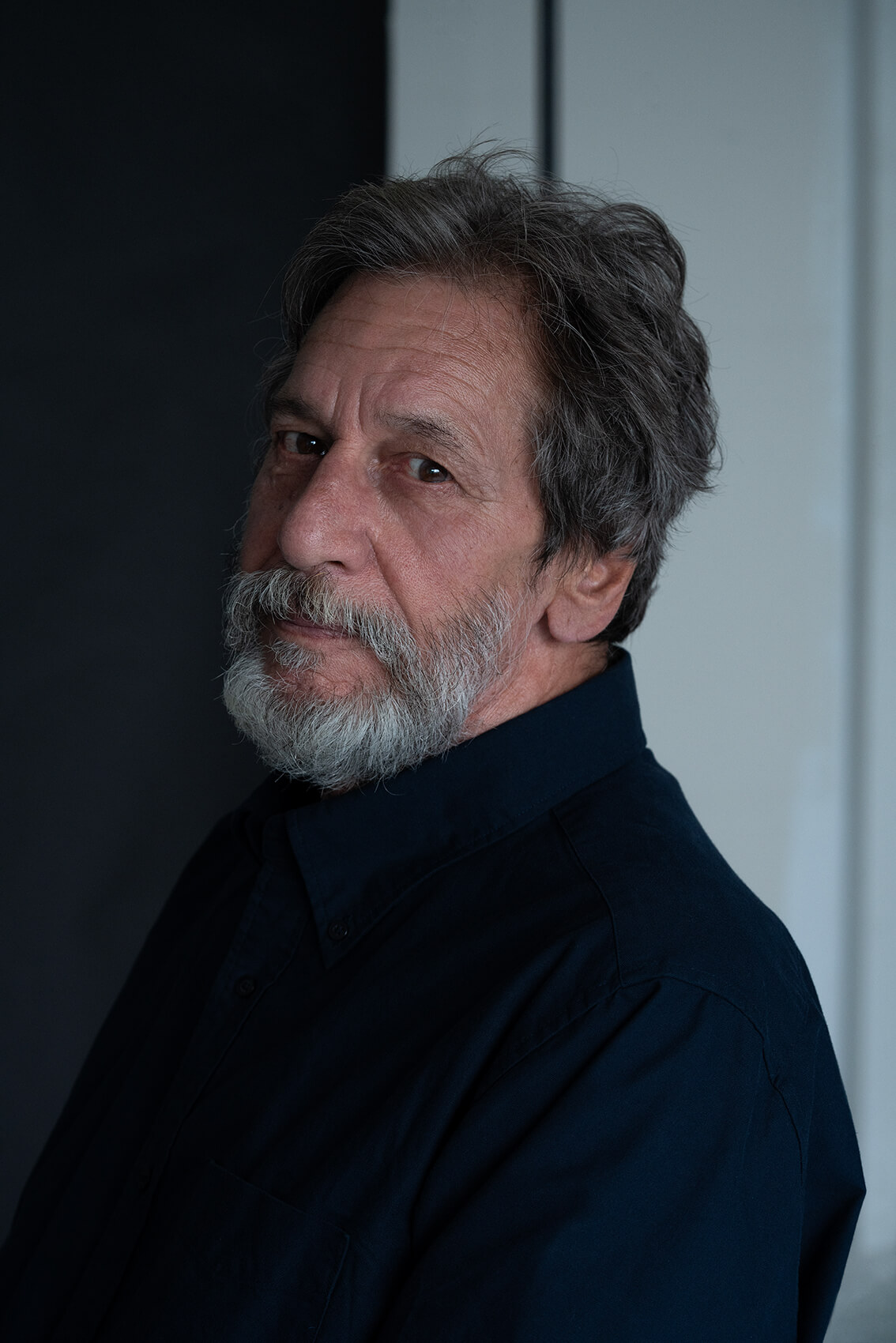
HCP is delivered by Joseph Scorselo and Dr. Leonard Khirug, both on-site for Tier 2 and Tier 3 engagements. The combined practice is 30 + 25 years. The methodology has been deployed inside corporate and operational settings – not adapted from a clinical or therapeutic context.
Dr. Leonard Khirug
Neuroscience · Tri-Unity Method
. PHD Neurophysiology . 25 years . Pharma Research . AOI AI .
Joseph Scorselo
Behavioral Change · Psychology
. 30 years practice . Industrial . Financial Services . Technology .
The Engagement
Ho we work
with organisations.
The Scoping Call
The Diagnostic Assessment
We map the specific neuro-somatic bottlenecks affecting your leadership team’s performance.
The HCP Protocol
Frequently Asked Questions
What sponsors
usually ask first.
No. Stress management addresses the surface experience — the feeling of being under pressure. HCP addresses the physiological accumulation that produces that experience as a downstream symptom. The mechanism is different, the toolkit is different, and the measurement is different. Stress management teaches coping. HCP closes incomplete recovery cycles at the nervous system level.
EAPs are essential and built for acute crisis support. HCP is upstream — for high-functioning senior contributors who are years away from any crisis but quietly accumulating the load that, left unaddressed, becomes the case the EAP eventually catches. The two programs serve different populations at different stages. HCP is not a replacement for your EAP. It is what prevents the referral.
Coaching operates on the choices an operator is conscious of and wants to change. Cognitive accumulation is, by definition, below the level of conscious choice — which is why it persists despite the individual's best efforts. HCP works at the physiological layer that coaching does not reach. The two are useful adjacent, not interchangeable.
All measurement data is aggregated at team level. No participant-level data is retained or reported. The 4-page diagnostic report delivered to the operational sponsor contains only team-level signals — no individual attribution. Participants are informed of this before the program begins.
Tier 1 (Awareness Session) can run with any group size up to 30. Tier 2 and Tier 3 are designed for intact working groups of 10–20. Below 10, the team-level measurement loses statistical reliability. Above 20, the on-site facilitation dynamic changes. The scoping call is where we calibrate this to your specific context.
Tier 3 (the Workforce Capacity Pilot) requires a half-day on-site at week 0, plus under 7 minutes per day of self-assessment during the 4-week active phase, plus a 45-minute online integration clinic at week 4. The design principle is that the measurement must not become a burden that adds to the load it is measuring.